Artem Voloskovets

The 40-year JGB yield jumped 6 bps to 4.27%, only 12 bps below its 4.39% record high set in May. The 30-year yield briefly hit 4.23%, its highest level since the maturity debuted in 1999, while the 20-year yield reached 3.97%, a roughly three-decade high.
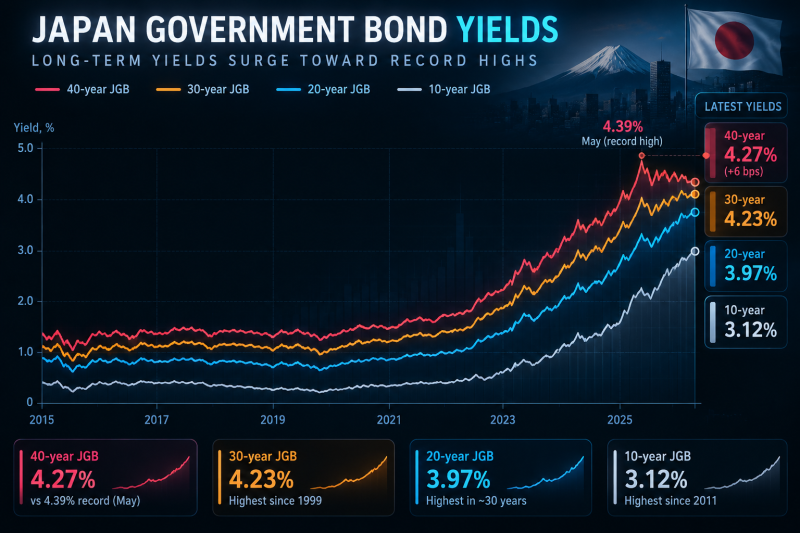
Long-End Yields Push Above 4%
| Maturity | Current | Previous level* |
| 20-year | 3.97% | 3.88% |
| 30-year | 4.23% | 4.18% |
| 40-year | 4.27% | 4.27% |
*September 1 benchmark levels.
Japan Bond Trading data show the 20-year yield at 3.88% and the 30-year at 4.18% at the start of September.
BOJ Tightening and Fiscal Risk Pressure JGBs
The selloff reflects higher BOJ rates, inflation and weak-yen risks, fiscal concerns, and reduced central-bank bond buying.
Persistent yen weakness, a widening term premium driven by concerns over fiscal discipline, and rising overseas rates” are keeping upward pressure on yields. according to Barclays Securities Japan.
Refinancing Costs Are Climbing
Japan’s government debt exceeds 200% of GDP, making higher yields particularly significant.
Existing fixed-rate bonds retain their coupons, but maturing debt must increasingly be refinanced at higher rates. With 20-, 30- and 40-year yields around 4%, Japan’s long-term government borrowing costs have risen sharply.
 Artem Voloskovets